

Immunogenicity & immunotoxicity assesment

Understanding and managing immune responses is a critical part of developing safe and effective biotherapeutics. At SYMBIOSIS, we support immunogenicity and immunotoxicity assessment with high-quality human-derived resources designed for translational relevance.

Why immunogenicity & immunotoxicity matter

Immune responses can significantly influence both the efficacy and safety of therapeutic products.

  • Unwanted immune activation may reduce drug efficacy
  • Formation of anti-drug antibodies (ADAs) can impact dosing and treatment outcomes
  • Immune-mediated toxicities may limit clinical development

Early and reliable assessment helps identify risks before they become critical in later development stages.

Immunogenicity

Immunogenicity describes the ability of a substance to trigger an immune response.
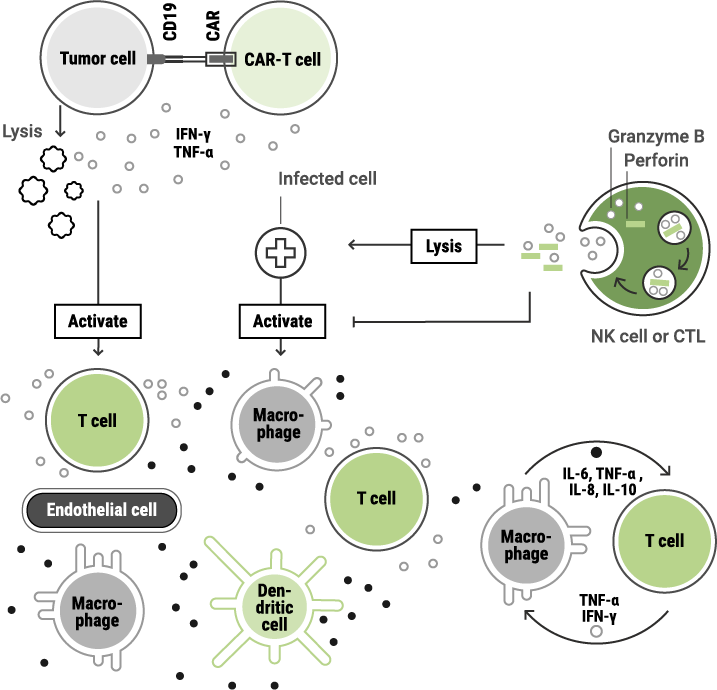
Schematic illustration of immunogenicity: immune cells such as T cells, macrophages, dendritic cells, and NK cells interact with target cells, leading to immune activation and the recognition and elimination of foreign or abnormal cells.

This can be:

  • Desired, for example vaccines
  • Undesired, particularly for protein-based therapeutics, biologics, or advanced therapies

Potential consequences of unwanted immunogenicity include:

  • Altered pharmacokinetics
  • Increased risk of adverse events

Immunotoxicity

Immunotoxicity refers to harmful effects on the immune system caused by a therapeutic compound.
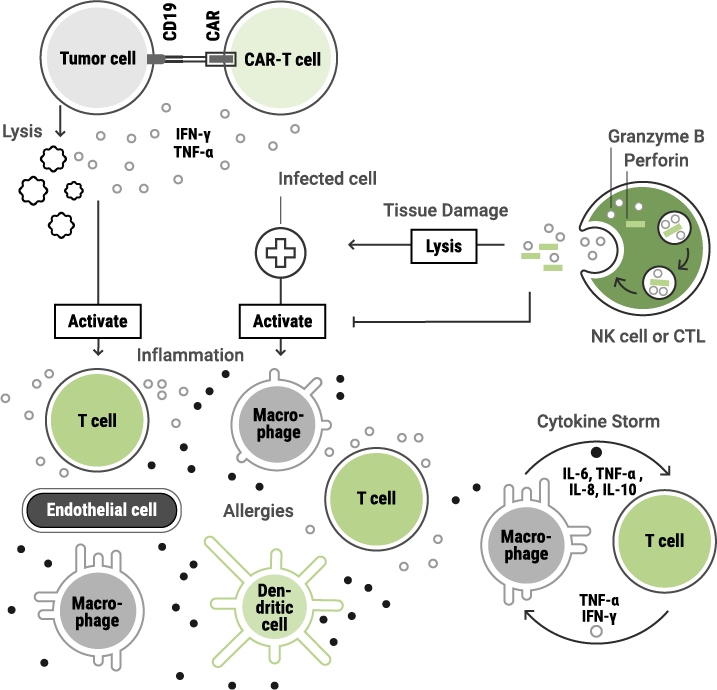
Schematic illustration of immunotoxicity showing CAR-T cell–mediated recognition and tumor cell lysis, T cell–driven immune activation, and NK cell–mediated granzyme release, followed by dysregulated immune responses leading to inflammation, allergy, tissue damage, and cytokine storm.

These effects may include:

  • Immune suppression
  • Excessive immune activation
  • Cytokine release
  • Immune-mediated tissue damage

Immunotoxic effects can occur even when the intended target is correctly addressed, making thorough evaluation essential.

Application areas

Assessment of immunogenicity and immunotoxicity is particularly relevant for:

  • Biologics and protein therapeutics
  • Monoclonal antibodies
  • Vaccines
  • Cell and gene therapies
  • Novel therapeutic modalities

At SYMBIOSIS, we focus on providing human-relevant biological materials that enable robust immune safety testing. Our resources support translationally relevant immune response assessment, population-representative testing strategies, and can be flexibly integrated into existing assay platforms.

Human-derived cell resources

SYMBIOSIS offers high-quality human immune cell materials to support immunogenicity and immunotoxicity studies, including:

  • Peripheral Blood Mononuclear Cells (PBMCs)
  • HLA-typed donor panels
  • Cryopreserved and ready-to-use formats

These materials support:

  • T cell activation and proliferation assays
  • Cytokine release studies
  • Immune profiling and functional testing

Bioassay-services

Our bioassay services provide robust testing solutions for both Research Use Only (RUO) applications and studies conducted under Good Laboratory Practice (GLP) conditions, enabling critical insights into cellular and molecular interactions.

Key assays offered:

  • PBMC stimulation / CD3+ CD4+ proliferation assay
    Evaluation of immune responses through stimulation and measurement of CD3+ CD4+ T cell proliferation derived from peripheral blood mononuclear cells (PBMCs).
  • Cytotoxicity assay
    Quantification of cellular toxicity or target cell killing capacity, essential for evaluating immune responses and therapeutic candidates.
  • Phospholipidosis assay
    Detection and assessment of compound-induced phospholipidosis, supporting drug safety evaluation and mechanism-of-action studies.

Contact us

We look forward to receiving your inquiry.

Inquiries via the contact form: My data will only be used strictly for the purpose of processing
and answering my request. By submitting the contact form, I consent to the processing.

Privacy policy acceptance
Home » Services » Immunogenicity & Immunotoxicity